
Checking for replaced parts involves two stages: the 5664 SMS service and an independent physical inspection. Texting PARCA to 5664 retrieves original and aftermarket parts recorded in insurance claims, while off-the-record repairs can only be identified through a workshop check and physical inspection. At our workshop in Kepez Akdeniz Sanayi, we assess whether panels require repair or replacement with a free assessment and repair them with guaranteed workmanship.
What is a replaced part check and why is it important?
One of the most critical aspects of buying a used car is the authenticity of the body panels. Checking for replaced parts is the process of determining whether a vehicle's original factory body panels were removed following an accident, impact, or corrosion and replaced with a new part.
In the Turkish used car market, replaced parts directly impact a vehicle's market value. However, far more important than financial value is driving safety. The installation quality of a replaced part, the integrity of spot welds, and whether the chassis sustained impact during a collision play a vital role. Purchasing a car without proper checks can lead to serious financial losses and safety hazards down the road. In this guide, we explain how to navigate both official SMS inquiries and professional inspection reports.
How to check replaced parts via 5664 SMS
The 5664 SMS service provided by the Insurance Information and Monitoring Center (SBM) is the official system for accessing damage and parts breakdowns for vehicles repaired through insurance policies in Turkey. Through this inquiry, you can find out which parts were replaced, on what date, and at what cost.
- Inquire about the general damage history: Type the vehicle's license plate directly into your phone's messaging app (e.g., 07ABC123) and send an SMS to 5664. The reply lists the dates of accidents involving the vehicle and the total damage amounts.
- Identify the accident date: From the damage summary received, note the date (DD/MM/YYYY) of the accident for which you want to see parts details.
- Send the parts detail inquiry: In your message, type
PARCA PLATE ACCIDENT_DATE(e.g.,PARCA 07ABC123 15/04/2024) and send it to 5664. To query by chassis number, you can use thePARCA S VIN ACCIDENT_DATEformat. - Analyze the incoming SMS breakdown: The reply lists each part covered by insurance in the accident, the quantity, part type (Original, Equivalent, or Aftermarket), and prices.
- Check labor costs: Paint and bodywork labor costs are also specified below the parts list, giving you a clear picture of the scope of the repair.
Important Tip: To avoid missing previous damage records when license plates have changed, it is always recommended to perform the inquiry using the 17-character vehicle identification number (VIN) found on the vehicle registration document.
Limitations of the 5664 inquiry: Unrecorded damage
A common misconception among buyers is assuming that a vehicle with no damage records in a 5664 inquiry is completely original. The 5664 system only records repairs carried out officially through authorized or independent repair shops after opening an insurance claim under comprehensive or compulsory traffic insurance.
If a previous owner did not file an insurance claim after an accident and paid cash out-of-pocket at a workshop in an industrial estate, that repair is never entered into the SBM database. Even if salvage parts were installed or aftermarket sheet metal was welded on, the vehicle may appear "Damage-Free" in the SMS inquiry. This is why an SMS inquiry alone is not enough; it must always be backed up by an independent physical inspection.
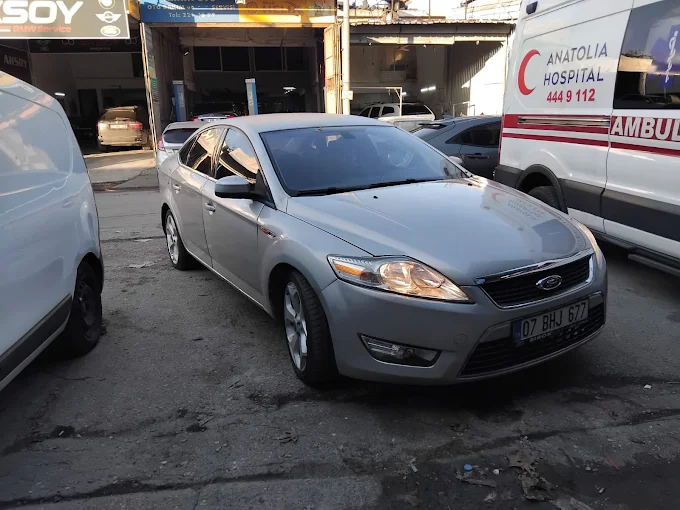
Replaced parts and paint analysis in inspection reports
When you visit a professional inspection center, the car is raised on a lift, all panels are scanned with micron paint depth gauges, and mounting points are examined. In the bodywork section of the report, you will encounter five basic statuses:
- Original (Damage-Free): The panel has factory-spec paint thickness in microns, mounting bolts show no signs of tampering, and sheet metal retains factory spot welds.
- Repainted: The panel is the vehicle's original sheet metal, but has been repainted due to scratches, scuffs, or sun fading. We explain what different paint statuses mean in detail in our guide on buying a repainted car.
- Spot Repaired: Not the entire panel, but only a specific area has been blended and clear-coated. Value loss is minimal.
- Removed and Reinstalled (Adjusted): The mounting bolts show wrench marks. The panel was unbolted and reattached, but it is the car's original panel, not a replacement.
- Replaced: The vehicle's original panel was completely removed and discarded, and replaced with a new OEM or salvaged part.
Part by part: What does replacing each part indicate?
Not every part replacement on a vehicle carries the same level of risk. While replacing bolt-on exterior panels that are easily unbolted poses little safety concern, replacing welded structural frame components is a serious warning sign.
| Replaced Part | Common Reason for Replacement | Safety Impact | Areas to Inspect |
|---|---|---|---|
| Front / Rear Bumper | Cracked plastic, parking scuffs, minor bump | Negligible | Bumper reinforcement bar, foam impact absorber, lower radiator support |
| Front Fender | Intersection scrape, bicycle/motorcycle contact | Very Low | Apron (podye) panel, inner wheelhouse metal, strut towers |
| Door Skin / Complete Door | Deep side scrape, guardrail contact, crushing | Low – Moderate | Center B-pillar, striker plates, spot welds beneath weatherstripping |
| Hood (Bonnet) | Front-end collision, crumpling, severe stone chips | Moderate | Chassis rail ends, front crossmember, radiator support, headlight brackets |
| Trunk Lid (Tailgate) | Rear-end collision, reversing impact | Moderate | Trunk floor pan, spare wheel well, rear body panel seams |
| Rear Quarter Panel | Severe side impact (Non-bolted; replaced by cutting and welding) | Moderate – High | C-pillar cut line, weld seams, weatherstrip spot welds |
| Roof Panel | Rollover, overturn, falling heavy object | High | A, B, and C pillars, headliner, windshield and window frame seals |
Installation and paint quality of replaced parts
A replaced panel does not necessarily mean the car is unroadworthy. Today, insurance companies often prefer replacing a slightly dented door with a brand-new genuine door under comprehensive insurance rather than spending hours straightening it. What is truly critical here is how the newly fitted part was prepared and painted in the workshop.
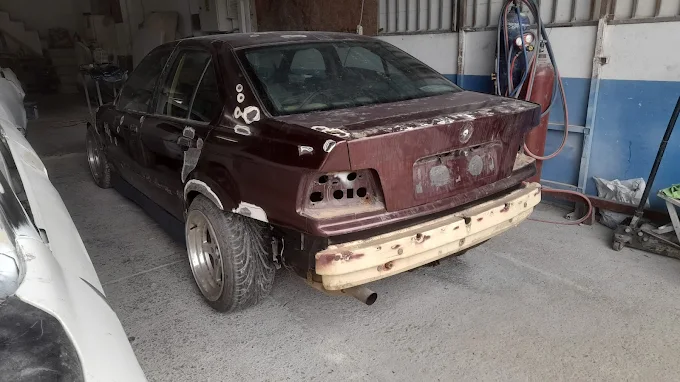
New sheet metal panels arrive from the manufacturer with a black protective electrodeposition primer (e-coat / cataphoresis). A high-quality workshop meticulously sands this panel, applies primer, matches the color precisely using digital color matching, and paints it in an oven-baked paint booth. With aftermarket parts, body character lines may not align cleanly with adjacent panels and paint adhesion may be weaker. You can review paint terminology and process stages in our auto paint glossary.
Paint and bodywork repair costs
When dealing with a panel that has been replaced or needs repainting, it is important to estimate the repair budget accurately. Our owner-approved panel painting and complete car painting price ranges for 2026 at our workshop in Kepez Akdeniz Sanayi Sitesi industrial estate are as follows:
| Service Area | Price Range | Average Turnaround |
|---|---|---|
| Bumper painting | 2,500–5,000 TL | 1–2 days |
| Door painting | 3,500–6,000 TL | 1–2 days |
| Fender painting | 4,000–7,000 TL | 1–2 days |
| Hood or Roof painting | 5,000–10,000 TL | 1–2 days |
| Complete car painting | 25,000–80,000 TL | 5–10 days |
For various panel options and spot repair prices, you can visit our Antalya panel painting prices page.
When should you consult a specialist?
If the seller's statement conflicts with the inspection report when buying a used car, or if you notice waviness, color shade mismatch, or clear coat peeling on a replaced panel, you should have it evaluated by an experienced bodywork and paint specialist.
At our workshop in Kepez Akdeniz Sanayi Sitesi, Antalya, we use premium PPG and Standox paints, a dust-free oven-baked paint booth, and digital color matching systems. We ensure flawless panel alignment for replaced parts and back all our workmanship with a guarantee. You can stop by our workshop for a free assessment or send photos via our WhatsApp line for an initial evaluation.
Send photos of the replaced or damaged panel on your vehicle, and we will quickly provide a repair cost estimate and turnaround time.
We are here for bodywork, part replacement, and oven-baked paint repairs in Kepez Akdeniz Sanayi Sitesi.
Frequently Asked Questions
How do you check for replaced parts on a car?
Replaced part inquiries are done via SMS through the Insurance Information and Monitoring Center (SBM). By texting PARCA [license plate] [accident date] to 5664 from your mobile phone, you can retrieve the list of parts replaced under insurance coverage.
Does a 5664 SMS inquiry show all replaced parts?
No, a 5664 SMS inquiry only lists parts officially repaired by filing a claim through comprehensive or compulsory traffic insurance. Part replacements done privately with cash payments outside of insurance will not appear in SMS records; therefore, a physical inspection is essential.
How can you tell if a part was replaced in an inspection report?
On the bodywork inspection diagram of an inspection report, replaced panels are typically marked in a distinct color (often red or black) with the word 'Replaced' or the letter 'D' next to them. In addition, wrench tool marks on panel mounting bolts are checked.
Is a removed-and-reinstalled part the same as a replaced part?
No, they are not the same. A removed-and-reinstalled part (sök-tak) means the vehicle's original panel was unbolted and reattached for painting or panel alignment. A replaced part means the damaged panel was removed from the vehicle and replaced with a brand-new or salvaged part.
Does replacing a plastic bumper affect damage records and resale value?
Plastic bumpers are not structural parts that provide cabin safety. Even if the part cost appears in insurance damage records (TRAMER), bumper replacement is not considered bodywork replacement on the market and does not significantly decrease the vehicle's value.
How can you tell if a replaced part is genuine (original) or aftermarket?
Genuine parts feature the manufacturer's logo, part serial number, and factory spot weld marks. Aftermarket parts lack the logo, may have variations in sheet metal thickness and body character lines, and their paint thickness (micron) deviates from factory values.
How long does it take and how much does it cost to paint a replaced part?
Priming and oven-baking a newly installed panel usually takes 1–2 days at our workshop. Our owner-approved 2026 price ranges are 3,500–6,000 TL for a door, 4,000–7,000 TL for a fender, and 2,500–5,000 TL for a bumper. For full vehicle work, you can visit our Antalya complete car painting page.
Related pages
- Should you buy a repainted car guide
- Used car paint inspection
- Auto paint glossary
- Antalya panel painting prices
- Antalya complete car painting
Let's Accurately Determine Your Vehicle's Panel Replacement and Painting Needs
To find out whether damaged panels on your vehicle can be repaired without replacement, visit our workshop in Kepez Akdeniz Sanayi Sitesi or send photos via WhatsApp.