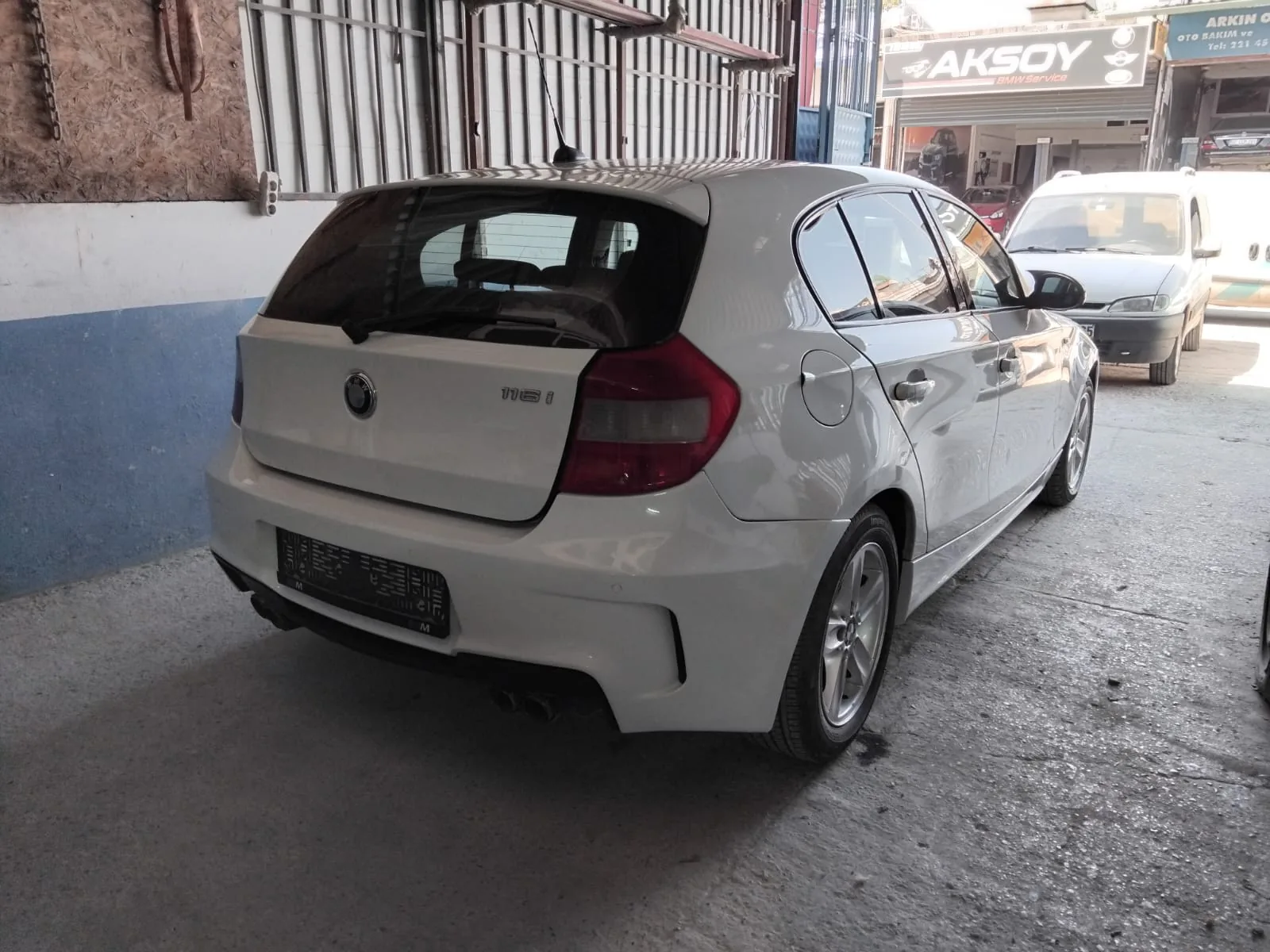
Car paint terms are words that describe what each layer of paint does and which procedures are carried out in the workshop. Below, we explain more than 40 of the most common terms in one or two sentences each. We use these terms when quoting at our workshop in Kepez, Akdeniz Sanayi Sitesi industrial estate; knowing their meanings makes comparing quotes much easier.
When visiting a bodyshop, you might hear phrases like "we'll apply high-build primer, sand down the body filler with P180, then spray the base coat and clear coat." This sentence simply describes a standard workflow, but without knowing the terms, it is difficult to understand what you are paying for. We have organized this guide by paint layers, procedure types, color, sandpaper grits, and surface defects. You can easily find any term in the tables below.
Terms related to paint layers
Automotive paint is not a single layer; moving outwards from the metal, it typically consists of three main layers: primer, color coat, and clear coat. The terms below explain these layers and the materials used between them.
| Term | Meaning |
|---|---|
| Primer (Astar) | The first paint layer applied over bare metal or body filler. It protects against rust and moisture, and ensures adhesion for the subsequent color coat. |
| High-build primer (Dolgu astar) | A thick, sandable primer. It fills sanding scratches and minor surface imperfections, helping the panel achieve a perfectly level finish. |
| Body filler (Macun) | A paste-like filler applied to level out deep imperfections such as dents, low spots, or weld marks. Once hardened, it is sanded to match the contour of the panel. |
| Fine filler / finishing putty (İnce macun) | A light finishing layer that fills pinholes and fine sanding scratches left on coarse body filler. It smooths the surface one last time before painting. |
| Base coat / color coat (Baz kat) | The layer that gives the vehicle its color. It is not glossy on its own; gloss is provided by the clear coat applied over it. |
| Clear coat (Vernik) | The transparent protective layer applied over the base coat. Gloss level, scratch resistance, and UV protection are largely determined by this coat. |
| Single-stage paint (Tek kat boya) | A paint system where color and gloss come together in a single product without a separate clear coat. Mostly seen on older or commercial vehicles. |
| Thinner (Tiner) | The solvent used to thin paint and make it sprayable through a spray gun. The correct mixing ratio ensures the paint flows and levels out properly on the surface. |
| Hardener (Sertleştirici) | The additive that initiates the chemical curing reaction in two-component (2K) primers, paints, and clear coats. If the ratio is wrong, paint cures too slowly or may crack. |
| 2K (Two-component / İki bileşenli) | A system where the base material and hardener are mixed before application. It is standard in modern automotive refinishing and produces a durable finish. |
Quick distinction: Body filler restores the shape, primer prepares and protects the surface, base coat provides the color, and clear coat provides gloss and protection. Ask your workshop which of these are included in the quote.
What are microns and paint thickness?
A micron is one thousandth of a millimeter and is used to measure paint layer thickness. A human hair is roughly 70–80 microns; total factory paint thickness is typically about one to two times that.
When a panel's micron reading is taken with a paint depth gauge, it gives insight into whether that panel has been repainted before. A panel that reads noticeably thicker than adjacent panels has usually been repainted or has body filler applied. This measurement is frequently used when buying a used car; for details, see our guide on used car paint inspection.
Names of procedures carried out in the workshop
The procedure names listed on a quote define the scope of work and therefore the price. For the same damage, the difference between "spot repair" and "full panel" changes both turnaround time and cost.
| Term | Meaning |
|---|---|
| Spot repair painting (Lokal boya) | Painting only the damaged section of the panel and blending into surrounding areas. It provides a solution for minor scratches and dents without painting the entire panel. Details on our spot repair painting page. |
| Panel painting (Parça boya) | Painting an entire panel such as a door, fender, or hood. In our workshop, panel painting usually takes 1–2 days; a door is quoted in the range of 3,500–6,000 TL. |
| Complete car painting (Komple boya) | Painting the entire exterior surface of the vehicle. It takes 5–10 days, in the 25,000–80,000 TL range. Explained on our complete car painting page. |
| Touch-up (Rötuş) | Spot correction applied to very small scratches and stone chips. Only the blemished spot is treated rather than the entire surface. |
| Compounding / rubbing compound (Pasta) | An abrasive product or process that removes fine scratches and dullness from the clear coat surface. Compounding restores gloss, but does not add a new layer over the paint. |
| Polish / waxing (Cila) | A fine finishing treatment applied after compounding to boost gloss and provide short-term protection. |
| Machine polishing (Pasta cila) | Applying compounding and polishing together. Revitalizes paint without repainting; for details, see our machine polishing page. |
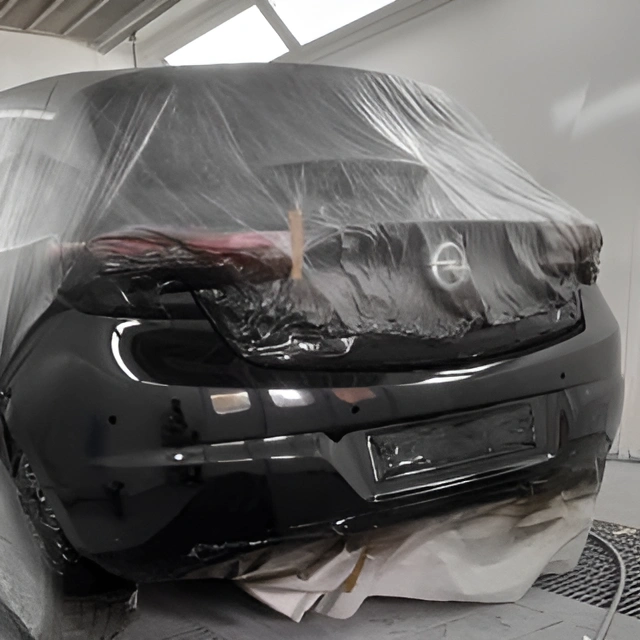
| Masking (Maskeleme) | Covering areas not being painted (glass, trim moldings, rubber seals, adjacent panels) with tape and paper. Inadequately masked vehicles suffer from paint overspray. |
| Disassembly and reassembly (Söküm-takım) | Removing trim, door handles, light bezels, and other accessories from the part to be painted, and reinstalling them after work is complete. Taping around parts without removal increases the risk of visible edge lines. |
| Bodywork repair (Kaporta düzeltme) | Restoring damaged sheet metal or plastic back to its original shape prior to painting. Painted (bodywork) dent repair falls into this category. |
| Baking / oven curing (Fırınlama) | Drying the painted panel with controlled heat inside an enclosed booth. Ensures the paint cures harder and more evenly. For how it works, see our article on what oven-baked paint is. |
| Curing (Kürleme) | The chemical process of paint fully hardening. Even after the surface becomes dry to the touch, deep layers continue curing for a period of time. |
| Paint booth (Boya kabini) | An enclosed, dust-free, filtered, and heated spray room. In our workshop, we use a dust-free oven-baked paint booth. |
| PDR (Paintless dent repair / Boyasız göçük düzeltme) | We do not perform paintless dent repair (PDR); that method pushes out dents from behind without touching the paint. In our shop, dents are repaired using painted (bodywork) methods; read about the difference in our article on painted vs. paintless dent repair. |
Color and color-matching terms
When painting a panel, the goal is not just "the same color," but ensuring it looks identical to adjacent panels. The terms below explain this.
| Term | Meaning |
|---|---|
| Color code (Renk kodu) | The short code assigned by the manufacturer to the vehicle's paint color. It is typically printed on a label on the door jamb, in the engine compartment, or in the trunk. The code is only a starting point; adjustments are still needed for weathered paint. |
| Color matching (Renk eşleştirme) | Adjusting the paint shade based on the code and the current condition of the vehicle. We use digital color matching. |
| Solid color (Düz renk) | Single-tone color containing no metallic or sparkling flakes. White, black, and most standard reds fall into this category; matching is generally simpler. |
| Metallic (Metalik) | Color containing fine aluminum flakes. It reflects light to create sparkle; spray angle and coat thickness affect the perceived shade. |
| Pearlescent / pearl (Sedefli) | Contains light-refracting mica flakes rather than metallic particles. It provides depth and subtle color shifts depending on the viewing angle, requiring more precision to match. |
| Shade mismatch (Ton farkı) | When a freshly painted panel appears slightly lighter, darker, or reflects differently than adjacent panels. Sun fading and aging can make this contrast more noticeable. |
| Color blending (Renk geçişi / blend) | Gradually feathering the paint from the repaired area onto the adjacent surface. Used to make shade differences unnoticeable. |
What do sandpaper grit numbers mean?
The higher the sandpaper grit number, the finer the abrasive particles. The letter "P" indicates European standard grit sizing. The ranges below summarize common workshop use; exact grits used at each stage vary by workshop and product system.
| Grit | Typical application |
|---|---|
| P60–P120 | Coarse work such as stripping old paint and initial shaping of body filler. |
| P150–P240 | Feathering body filler and leveling surfaces before applying high-build primer. |
| P320–P500 | Sanding primer; prepping the surface before applying the base coat. |
| P800–P1000 | Pre-color coat prep or removing minor imperfections. |
| P1500–P3000 | Leveling clear coat texture; followed by machine compounding and polishing. Usually done wet (wet sanding). |
Surface defects and paint problems
Most imperfections seen after painting have recognized technical names. Knowing them helps you communicate problems clearly to the bodyshop. Some can be corrected with machine polishing, while others require repainting.
| Term | Meaning & typical resolution |
|---|---|
| Orange peel (Portakal kabuğu) | Clear coat drying with a slightly wavy texture like an orange peel rather than glass-smooth. Caused by spraying too thick or too dry; if mild, it can be corrected with wet sanding and machine compounding. |
| Runs / sags (Akıntı) | Paint or clear coat applied too wet, sagging or dripping down the panel. Shaved and sanded flat after drying fully. |
| Dust nibs / specks (Pürüz / toz) | Tiny raised specks caused by airborne dust or lint landing on wet paint. A dust-free booth minimizes this risk, though cannot eliminate it entirely. |
| Fisheyes / craters (Balık gözü) | Small circular craters formed when paint pulls away from silicone, wax, or oil contaminants on the surface. Usually caused by inadequate surface degreasing. |
| Clear coat peeling (Vernik atması) | Clear coat separating from the base coat, flaking off or turning cloudy white. Results from sun exposure, aging, or weak adhesion; the permanent solution is usually repainting the affected panel. |
| Dullness / oxidation (Matlaşma) | Clear coat losing its gloss. If mild, it can be restored with machine polishing; if the clear coat has worn thin, repainting may be needed. |
| Bubbling / blistering (Kabarma) | Moisture or rust forming beneath the paint and swelling the surface. There is no permanent fix without grinding down to bare metal and treating the rust. |
| Cracking / checking (Çatlama) | Fine hairline cracks appearing on the surface due to excessive paint thickness, incorrect hardener ratio, or using rigid paint on flexible plastic parts. |
| Tape lines / masking ridges (Maskeleme izi) | A hard paint edge left along tape lines, indicating that transitions were not properly feathered or back-taped. |
Caution: Even if clear coat peeling and bubbling appear minor to the naked eye, rust may have started beneath. Rather than masking them with polish, request an in-person assessment to check beneath the panel surface.
Terms related to damage and the accident repair process
| Term | Meaning |
|---|---|
| Inspection / assessment (Ekspertiz) | Examining damage and paintwork to determine what needs to be done, how long it will take, and the cost. Assessment at our workshop is free. |
| Total loss / write-off (Pert) | Severe damage condition where repair costs approach or exceed the vehicle's market value. We handle write-off/major accident repairs; heavy damage repairs generally take 2–4 weeks. |
| Chassis / frame (Şase) | The load-bearing structural framework of the vehicle. If the chassis bends, dimensions are thrown off and door or hood panel gaps will not align. |
| Repainted panel (Boyalı parça) | An item on an inspection report indicating that the panel has been repainted at least once. Being repainted is not bad in itself; the quality of the paint job is what counts. |
| Replaced panel (Değişen parça) | Replacing a damaged part with a new one rather than repairing it. Shown separately from repainted parts on inspection reports. |
How to use these terms when comparing quotes
When you receive quotes from two bodyshops, ask these questions alongside the price figure: Will the panel be spot repaired or completely painted? Will body filler and primer be applied, or just base coat directly? Is clear coat included? Will it be cured in an oven-baked booth? If the answers differ, the two prices are not for the same scope of work. To understand what influences prices, see our guide on car paint prices 2026.
Consider turnaround times the same way. Panel painting takes 1–2 days, complete car painting takes 5–10 days; drying and curing are included in this timeframe. If someone quotes an unusually short timeframe, it is worth asking which preparation stage is being skipped. For more details on timing, read our article: how long does car painting take.
Send a photo of the damage on your vehicle, and we will advise what procedure is needed and provide an initial price estimate. Assessment at our workshop is free.
Frequently asked questions
What is the difference between primer and body filler?
Body filler fills deep low spots and restores the shape; primer coats the metal and body filler to help the upcoming color layer adhere. Both are sanded, but they serve different purposes and cannot replace each other.
Are clear coat and polish the same thing?
No. Clear coat is the transparent protective layer in the paint system and is permanent. Polish is a thin, temporary shine and protection treatment applied over the clear coat; it wears off over time with washing.
What is the difference between spot repair painting and panel painting?
In spot repair painting, only the damaged area is painted and blended into surrounding areas; in panel painting, the entire panel is painted. If the damage is small and confined to one spot, spot repair is best; if it is extensive or along the edge of the panel, panel painting is more suitable.
What should the micron reading be?
There is no single correct value; factory paint thickness varies by make and panel. What matters most is comparing it with adjacent panels: a panel with a noticeably thicker reading has usually been repainted or has body filler.
Can orange peel texture be fixed?
Mild orange peel can be smoothed out with sanding and compounding. If the clear coat was sprayed too thick and the waves are deep, the surface must be prepped and clear coated again. Which method is needed is determined by checking the panel with a paint gauge and by hand.
Where can I find the paint color code?
The code is usually found on the manufacturer label on the door jamb, in the engine bay, or in the trunk. The location varies by make and model. If you cannot find it, send a photo of the vehicle and we can check together at the workshop; the shade is still fine-tuned on the vehicle.
Do you perform PDR?
We do not do paintless dent repair (PDR). We repair dents using painted (bodywork) methods: the shape is restored, body filler and primer are applied if necessary, and then it is painted.
How long does full paint curing take?
Paint dried in an oven-baked booth is dry to the touch upon delivery, but deeper hardening continues for some time. For fresh paint, it is best to avoid stiff brushes and pressure washing during the first few days and weeks, and to wait for the workshop's recommended duration before machine polishing.