Car wash scratches—swirl marks that appear as circular rings in the sun—are mostly caused by dirty brushes, dry cloths, and incorrect washing order. These marks usually remain only in the clear coat. Proper washing prevents new ones from forming, while existing ones can be removed with machine polishing. At our workshop in Kepez Akdeniz Sanayi Sitesi industrial estate, we can evaluate photos and tell you whether machine polishing will be sufficient.
How do car wash scratches form?
Although the uppermost clear coat layer appears hard, it is actually a delicate, scratchable layer. Dust, sand, and road grime on top act like abrasive sandpaper. If you drag these particles across the paint with a cloth or brush while washing, hundreds of microscopic scratches form.
Individually, these scratches are invisible. Under direct sunlight or a powerful light source, however, round spiderweb-like swirl marks emerge. They are much more noticeable on dark-colored vehicles and less apparent on light colors.
What are swirl marks and spiderweb scratches?
All three are different names for the same phenomenon: very fine, multidirectional scratches in the clear coat. Because light scatters across these scratches, the paint loses its gloss and looks hazy.
| Mark type | Appearance | Common cause |
|---|---|---|
| Swirl marks | Circular rings in sunlight | Circular wiping with a dirty sponge or cloth |
| Linear scratches | Fine lines in the same direction | Brush washing, wiping with a dry cloth |
| Dry water spots | White ring, resembles a scratch | Hard water drying under the sun |
| Dull haze | General loss of gloss | Fine scratches accumulated over years, worn clear coat |
Tip: To be sure, swipe a clean, wet finger over the mark. If the white ring disappears and reappears, it is a water spot; if it does not disappear, it is a scratch—a swirl mark.
Improper washing habits
The following habits cause the most wear and tear on automotive paint.
- Wiping dust with a dry cloth: Pressing down and dragging dust is the fastest way to create fine scratches.
- Dirty sponge and single bucket: Dipping a sponge repeatedly into the same dirty water carries accumulated sand right back onto the paint.
- Brush-based automatic washes: Brush heads touch vehicle after vehicle; sand left over from previous cars can be rubbed against your paint.
- Dish soap or harsh chemicals: Strips away protective coatings and can dry out the paint.
- Washing in direct sun on hot paint: Water and shampoo dry rapidly, leaving spots and streaks behind.
- Scrubbing with towels: Old or coarse towels act abrasively on the clear coat.
Proper car washing steps
The best way to minimize scratch risk is to loosen dirt before touching the paint. The following sequence is the widely accepted approach for hand washing.
- Start in the shade on cool paintWait if the paint is hot or under direct sunlight. Water and shampoo must not dry on the surface.
- Pre-rinse with plenty of waterRinse away sand and heavy dirt with non-pressurized water before touching it with a cloth. Do not start with wheels and lower areas; rinse the upper surfaces first.
- Apply foamApply pH-balanced, automotive shampoo foam and let it dwell for a few minutes. Dirt loosens up.
- Two-bucket methodUse one bucket for soapy water and another for rinse water. Clean the wash mitt in the rinse bucket first before dipping it into the shampoo.
- Wash top to bottom in straight linesMove in straight lines with gentle pressure, not circular motions. Leave the dirtiest lower sections for last.
- Rinse thoroughly with plenty of waterLeave no shampoo residue; be sure to rinse door jambs and frame gaps as well.
- Dry without applying pressureSpread a clean, plush microfiber drying towel over the surface and gently drag it; do not rub or scrub.
Choosing microfiber and equipment
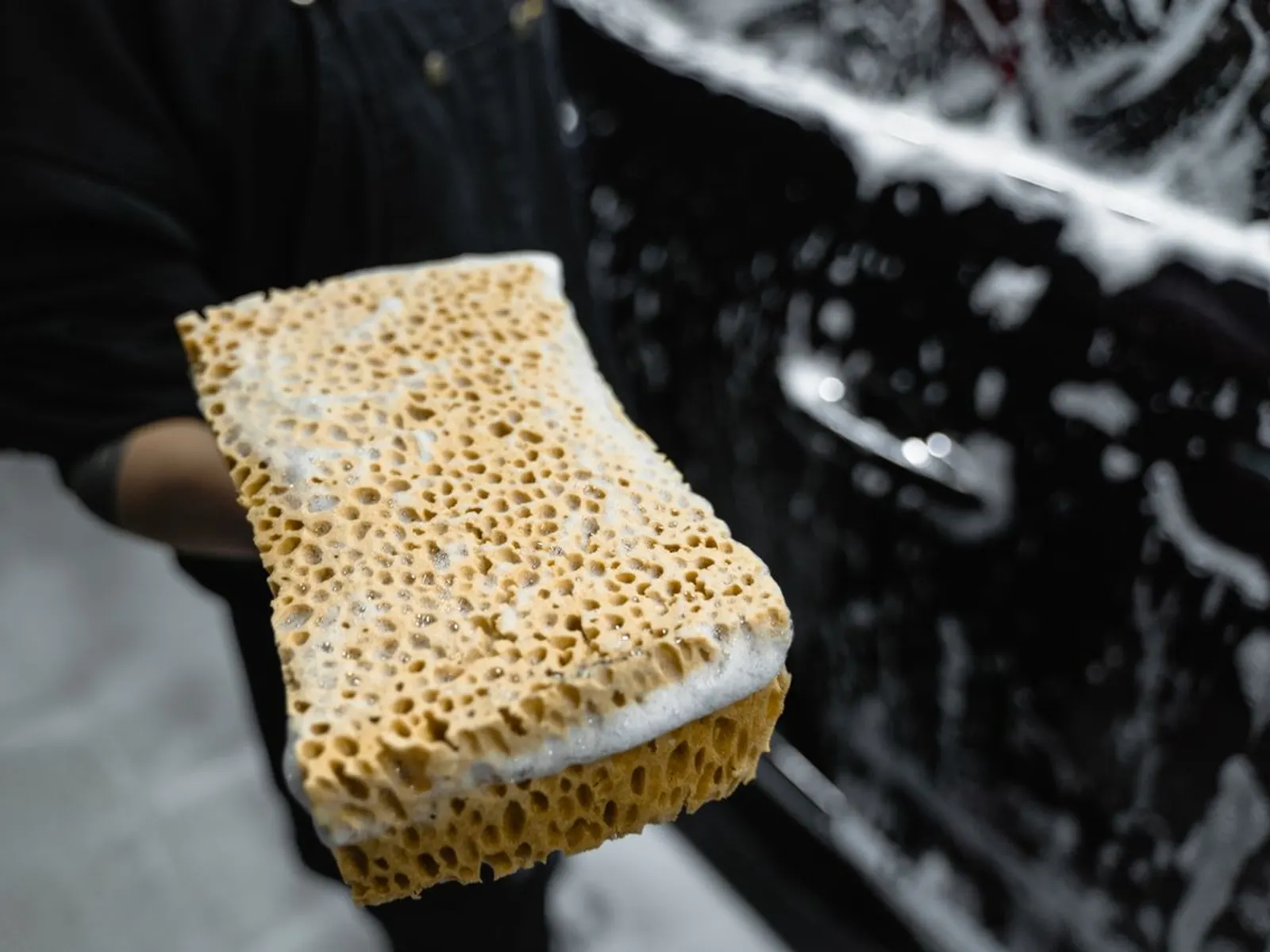
Proper washing does not require expensive equipment, but items must be clean and soft. A plush, high-pile wash mitt draws sand inward and traps it without scratching. For drying, a high-GSM microfiber towel maximizes water absorption, allowing you to work without pressing down.
Wash cloths and towels on their own without fabric softener; softener ruins microfiber absorbency. Never reuse a cloth that has dropped on the ground, as sand may be embedded in it. Instead of a generic grocery sponge, choose a wash mitt or microfiber wash pad.
How are existing wash scratches removed?
Because swirl marks reside in the clear coat, they are removed with machine polishing. Polishing levels a very fine micro-layer of the clear coat to eliminate the edges of scratches; wax or glaze then restores surface gloss. Since no paint is added, the original color does not change.
Machine polishing cannot fix everything. If a scratch catches your fingernail, base paint is exposed, or the clear coat is already excessively thin, painting is required. To determine scratch depth, you can check our fingernail test article.
When should you get machine polishing done?
- When circular swirl marks appear in sunlight even though the vehicle has just been washed.
- When the paint looks dull, hazy, or lacks luster.
- When fine scratches do not catch a fingernail but are visible to the naked eye.
- When you want to refresh the finish before selling the car, handing it over, or maintaining fresh paint.
Machine polishing thins the clear coat slightly each time; it should not be performed unnecessarily often. For details on frequency, see our article on how often machine polishing should be done.
Warning: Clear coat is exceptionally thin along edges, body lines, and plastic parts. High-speed polishing machines can burn through the paint in these areas. If unsure, send a photo and ask.
Send photos of the swirled area on your vehicle, and we will tell you whether machine polishing is enough. Assessment at the workshop is free.
How do you protect paint after washing?
Applying a thin protective layer after washing reduces dirt adhesion and makes subsequent washes easier. Spray sealants, liquid polishes, and carnauba waxes are available on the market; each lasts anywhere from several weeks to several months. These are maintenance products applied at home according to manufacturer instructions.
We do not apply protective coatings or paint protection films (PPF) at our workshop. We specialize in painting, touch-ups, spot repair painting, machine polishing, and bodywork repair. When choosing a maintenance product, focus on whether its application method fits your washing routine rather than just the brand name.
Scratch or paint defect?
Not every faint mark is a wash scratch. Occasionally, surface defects such as mild clear coat orange peel, waves, or dust nibs present a similar appearance. Pinpoint protrusions where a fingernail catches are dust nibs or clear coat flaws, whereas swirls are fine scratch lines on a flat surface.
If it is difficult to distinguish, inspecting the area under light from different angles helps. Swirls shift and appear depending on the angle of light, whereas paint defects remain fixed regardless of angle. If you are uncertain, a two-minute inspection at our workshop is usually enough.
Washing and dust in Antalya
During summer months in Antalya, dust, pollen, and coastal sea salt humidity frequently build up on vehicle surfaces. Wiping this buildup with a dry cloth drastically increases scratch risk. Therefore, always perform a thorough pre-rinse with water before drying, and wash in the shade whenever possible. If you park near the coast, frequently rinsing off salty humidity helps preserve the paint finish for the long term.
Difference between light and dark-colored vehicles
Swirl marks appear much more prominent on dark-colored vehicles because black or navy blue backgrounds reflect light while accentuating the tiniest scratch. White and silver vehicles hide the same scratches, but this does not mean they are scratch-free. As the color lightens, marks become less visible, yet the clear coat wears down just the same.
Therefore, inspect the vehicle in direct sunlight from a shallow angle before assuming it has none. For dark vehicle owners, careful washing habits are especially vital, as swirl marks will not disappear without machine polishing once they form.
Swirl marks vs. other fine marks on vehicles
Not all fine marks share the same origin. Wash swirls are circular and widespread. Parking scuffs are unidirectional and located at a specific panel height. Scratches around door handles are caused by fingernails and keys, typically forming crescent shapes.
- Circular marks across the entire vehicle: Washing and wiping habits.
- Crescent scratches around door handles: Fingernails and keys.
- Unidirectional long lines: Brushes, tree branches, or friction scuffs.
- Scratches on trunk lip: Scrapes while loading cargo.
The type of mark also determines the repair method and turnaround time. For widespread swirls, full-body machine polishing is considered, whereas spot work may suffice for a single isolated area.
Common washing question: is high-pressure water harmful?
High-pressure water is beneficial during pre-rinsing because it loosens most dirt without cloth contact. However, if applied from too close a distance or at excessive pressure, it can peel paint along trim moldings, chipped edges, or areas with pre-existing bubbling.
Do not direct pressurized water onto cracked, bubbling, or lifting paint. In general, maintaining a safe distance from the vehicle surface and using a wide-angle nozzle tip is much safer.
Preparation at home before machine polishing
A basic wash before arriving at the workshop is sufficient, but following the proper steps above rather than an improper wash improves the outcome. Check scratches yourself and note areas where your fingernail catches; those spots may not buff out with polishing. If possible, take a few photos of the car in sunlight, where swirl marks show up most clearly.
Most wash scratches do not recur once conscious washing habits are adopted. The key is eliminating dirty equipment, loosening grime with water first, and working without putting pressure on the paint. For existing swirls, there is no need to delay unnecessarily; as the clear coat thins with weathering, the margin for machine polishing correction narrows. You can send photos of your vehicle to find out in advance whether polishing will be sufficient.
Frequently asked questions
What causes car wash scratches?
When sand and dust on the paint are dragged with a dirty brush, sponge, or dry cloth, hundreds of fine scratches form in the clear coat. These scratches look like swirls in the sun.
Can swirl marks be removed with machine polishing?
Most of the time, yes. Because swirl marks remain in the clear coat, they can be removed with machine polishing. Scratches that catch your fingernail may require paint.
Does an automatic car wash with brushes damage the paint?
Because brush heads can carry sand from previous vehicles, there is a risk of fine scratches. Whenever possible, hand washing with clean equipment is safer.
What is the two-bucket method?
It involves using two buckets: one with car shampoo and the other with rinse water. You rinse the wash mitt or cloth in the rinse bucket first before dipping it into the shampoo, preventing sand from being dragged back onto the paint.
Is wiping the car with a dry cloth harmful?
Yes. Dragging dust with a dry cloth abrades the paint. You should first loosen dirt with water and dry gently with a clean microfiber without applying pressure.
How long does machine polishing take?
The duration depends on the size of the vehicle and the density of the marks. For minor damage requiring scratch removal, we take a 1–3 day timeframe as a baseline; we confirm the exact turnaround time during the assessment.
How do you distinguish a water spot from a scratch?
Wipe it with a wet finger. If the white ring disappears and reappears, it is a water spot; if it does not disappear, it is a scratch, meaning a swirl mark.
When is painting required for swirl marks?
If the scratch distinctly catches your fingernail, the paint color or primer is visible, or the clear coat has become too thin, polishing alone is not enough. In this case, touch-up or spot repair painting is required.
Related articles and pages
- Machine polishing
- How to fix car scratches? Fingernail test
- How often should machine polishing be done?
- Scratch repair
- Bird droppings paint cleaning
Get an initial quote with photos
Send photos of the damage via WhatsApp, and we will provide an initial estimate and turnaround time. Assessment at the workshop is free. Address: Kepez Akdeniz Sanayi industrial estate, Şafak Mah. 5040. Sk. Sanayi 28/A Blok No 16, Kepez/Antalya.