Machine polishing is a surface correction process that removes fine scratches, swirl marks, and dullness from the top layer of paint, restoring its shine. We perform it at our workshop in Kepez Akdeniz Sanayi industrial estate. Deep scratches, peeling paint, and dents cannot be fixed with polishing; in these cases, painting is required. We can tell you from a photo which option is right for your vehicle.
What does machine polishing do?
Car paint consists of two layers: the color layer underneath and the clear coat protecting it on top. Over time, washing, dust, sun, and bird droppings wear down the surface of the clear coat; the surface becomes covered with microscopic scratches and scatters light. What the eye sees is dull paint with swirl marks.
Machine polishing corrects this surface with a progressively refined layer. The edges of scratches are rounded off, the surface becomes smooth again, and light reflects evenly. The paint is not renewed; only its surface is refreshed.
What does machine polishing remove, and what can it not remove?
| Issue | Is machine polishing enough? | Alternative |
|---|---|---|
| Fine scratches and swirl marks from washing | Yes | - |
| Dullness, faded paint | Yes, if clear coat is intact | - |
| Bird droppings and rain mark stains | Yes, if only on the surface | - |
| Scratch catching a fingernail | Usually no | Scratch repair |
| Clear coat peeling, flaking paint | No | Spot repair painting or panel painting |
| Dent | No | Dent repair |
Fingernail test: Run your fingernail gently across the scratch. If your nail does not catch, the scratch is likely in the clear coat and can be removed with polishing. If it catches, the scratch may have reached the color layer or primer. For details, see our article on the fingernail scratch test.
Send a photo of the vehicle, and we will let you know if machine polishing is sufficient. Assessment at the workshop is free.
Polishing or painting?
The answer depends on the condition of the clear coat layer. If the paint surface is dull but intact, machine polishing is often sufficient. If the paint has bubbled, cracked, or peeled, polishing is not a solution, because the lost layer cannot be brought back.
- Machine polishing: Surface correction. Nothing is added to the paint layer; only the upper surface is corrected.
- Spot repair painting: Only the damaged area is refinished. Suitable for deep scratches and minor peeling.
- Panel or full respray: A permanent solution for vehicles where paint deterioration is widespread.
If the vehicle's paint has degraded over the years from the sun, machine polishing only provides temporary benefit. If the clear coat is already thin, polishing reduces this thickness even further; therefore, have the clear coat condition checked before proceeding. For a more detailed breakdown, you can check our article on clear coat failure and paint peeling.
How is full machine polishing done?
Full machine polishing involves treating all painted surfaces of the vehicle in sequence. Spot polishing covers a single panel, while full polishing covers the entire vehicle. The main steps are:
- Washing and inspectionThe vehicle is washed and the paint surface is inspected under lighting; scratch depth and clear coat condition are assessed.
- MaskingPlastic, rubber, and chrome trims are taped off. This prevents compound residues from staining these parts.
- Coarse compoundFor deeper scratches, the surface is leveled with a more aggressive compound and cutting pad.
- Fine polishMarks left by the coarse compound are refined with a finer polish.
- Finishing wax and cleaningFinal gloss is applied, residues are wiped off, and the surface is inspected.
Pads and compounds change at every stage; if steps are skipped, swirl marks remain on the surface. This is why machine polishing is not just a quick shine, but a methodical surface correction process.
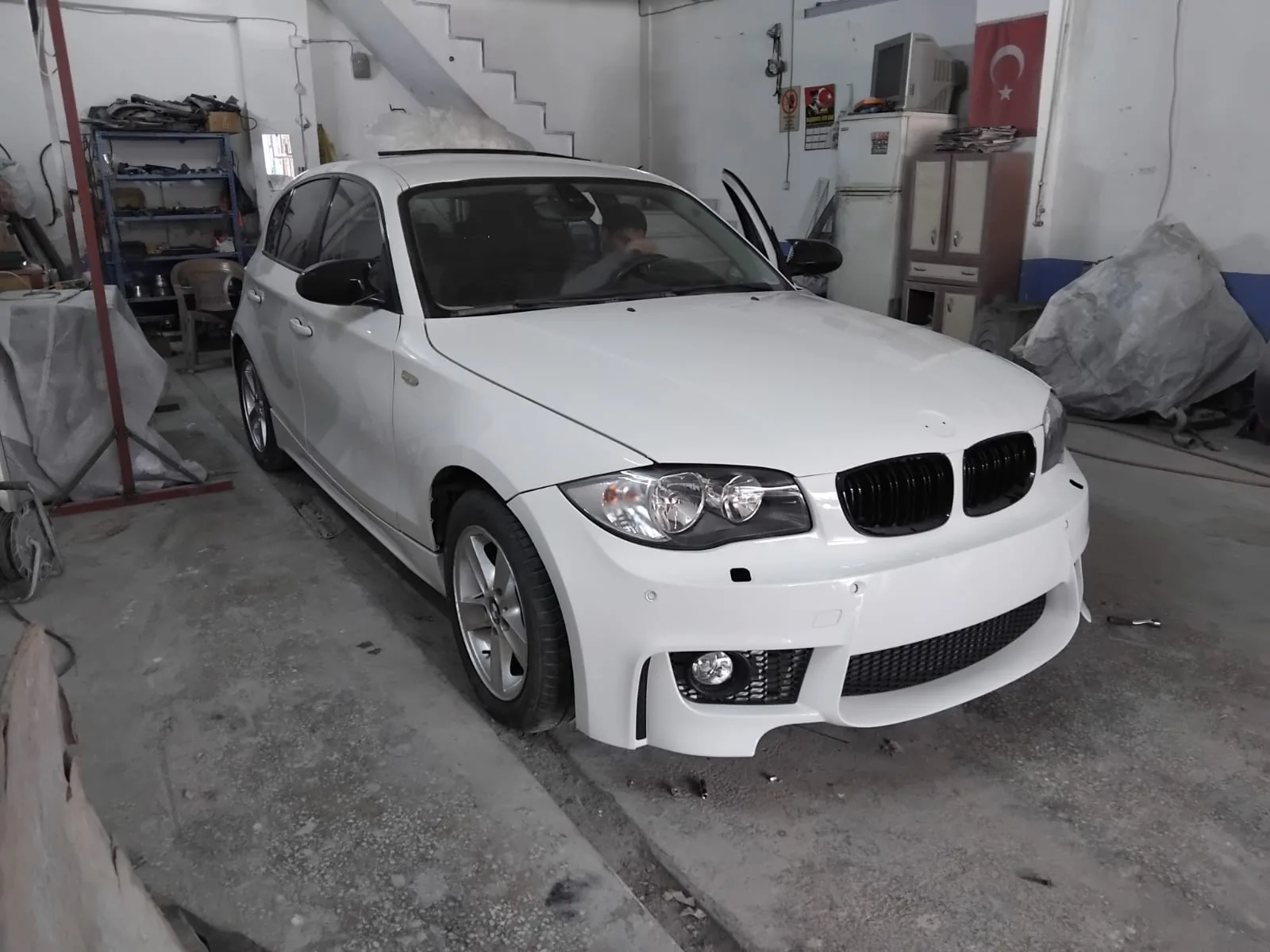
Why are swirl marks more noticeable on dark-colored vehicles?
On colors like black, navy blue, and dark gray, every fine scratch on the surface appears as a stark white line in the light. On lighter colors, the exact same scratch goes almost unnoticed. That is why owners of dark vehicles feel the need for machine polishing more often; however, frequent polishing thins the clear coat. The solution is improving washing habits and having polishing done only when visible damage occurs.
Antalya's sun and dust also take a toll on paint. The sun wears down the top surface of the clear coat, while dust leaves fine scratches when wiped with a dry cloth. Wiping down a dusty car with a dry cloth is one of the leading causes of swirl marks.

Does machine polishing thin the paint?
Every compounding process removes a very thin layer of the clear coat. This amount is small in a single treatment; however, if repeated frequently, the clear coat thins over time and leaves the paint unprotected. For this reason, machine polishing should be done when needed, not as an annual routine. We explained the frequency in our article on how often machine polishing should be done.
Caution: The clear coat may be thin on vehicles that have been heavily polished before, or on older or repainted cars. On such vehicles, a lighter treatment is needed instead of an aggressive compound; in some cases, polishing is not recommended at all. We make no definitive promises without inspecting the vehicle.
What should you do before and after machine polishing?
- You do not need to wash the vehicle before arriving for machine polishing; it is washed at the workshop.
- Tell us what caused the scratches (car wash brush, tree branches, key, etc.).
- Avoid automatic brush car washes during the first few days after the treatment. Wash scratches most commonly come from brush systems.
- Use a clean microfiber cloth when hand washing, and never drag a dry cloth across the surface.
For more on how washing damages paint, see our article on improper car washing and scratches.
How long does car machine polishing take?
The time required depends on vehicle size and scratch density. For a vehicle with light swirl marks, the process usually takes 1 day; if there are extensive scratches, it takes longer. Polishing a single panel takes less time. As for pricing, we do not provide exact figures without seeing the vehicle's condition; simply send a photo, and we will advise on the necessary treatment and provide initial information.
How do you choose a workshop for machine polishing?
Machine polishing may look simple, but it requires craftsmanship. The wrong pad, the wrong compound, or too much pressure can burn through the clear coat. Ask the workshop these questions:
- Is the clear coat thickness checked before the process?
- Are the coarse compounding and fine polishing stages performed separately?
- Are plastic and rubber trims taped off?
- Is an inspection carried out under proper lighting after the treatment?
- Are deep scratches and non-correctable damage pointed out honestly?
We make no promises without inspecting the vehicle, and we clearly point out any damage that cannot be removed by polishing.
Is machine polishing worth it before selling a car?
Refreshing the paint surface before selling a vehicle enhances the first impression. Swirled and dull paint makes a car look older than it is. However, machine polishing only corrects the surface; if there are repainted panels, dents, or peeling clear coat, a buyer will detect them with a paint gauge. Bring the car in for an assessment before selling, and we will tell you which panels can be revived with polishing and which require paint.
Post-polishing care is up to you
Machine polishing levels the surface; it does not add an extra protective coating. After this process, maintaining the vehicle is up to you: regular and proper washing, parking in the shade, and cleaning harmful residues promptly. For seasonal maintenance tips, check out our article on car paint care.
When should you get machine polishing?
- If the paint looks swirled and dull in sunlight
- If fine scratches are visible under light after washing
- If bird droppings or rain marks left etched residues on the surface
- If you want to refresh the paint surface before selling the car
Send a photo of the damage, and we will provide an initial quote and turnaround time. Assessment at the workshop is free.
Frequently Asked Questions
What does machine polishing do?
It removes fine scratches, swirl marks, and dullness in the top layer of paint, allowing the surface to reflect light properly. It does not resolve issues like deep scratches or dents.
Should I get machine polishing or paint?
If the clear coat is intact and the scratch is on the surface, machine polishing is sufficient. If the paint is cracked, peeling, or the scratch is deep enough to catch a fingernail, painting is required.
How much does full machine polishing cost?
The price varies depending on vehicle size, scratch intensity, and clear coat condition. We do not provide figures on this page; if you send a photo, we can give preliminary info, and the final price becomes clear upon assessment.
How long does car machine polishing take?
Depending on the vehicle's condition, usually 1 day. If there are extensive scratches, it may take longer.
Does machine polishing thin the paint?
With a multi-stage compound system, very little clear coat is removed during each process. Excessive and frequent application can thin the paint; therefore, machine polishing should only be done when necessary.
How often should machine polishing be done?
There is no set schedule. It is done when the paint becomes dull or scratches become visible. Routine, frequent polishing thins the clear coat.
Can deep scratches be removed with machine polishing?
Scratches that catch a fingernail often cannot be removed with polishing; they have reached the paint layer. For such scratches, spot repair painting or scratch repair is required.
Related Pages
SEND A PHOTO
Send a photo of the damaged area via WhatsApp, and we will provide an initial quote and details on the required work. You can also visit our workshop for a free assessment.