
The car paint code is located on the manufacturer label on the driver's door pillar (B-pillar), under the engine hood, or on the trunk floor. This code of letters and numbers indicates the exact factory color formula; however, if your vehicle has faded in the sun, digital color matching is essential for an exact match. At our workshop in Kepez Akdeniz Sanayi Sitesi industrial estate, we provide guaranteed repairs without tone differences using PPG and Standox paints and digital color matching.
What is a car paint code and why is it needed?
Automobile manufacturers develop dozens of different color formulas for every model year. For instance, there is no generic "white" or "grey" vehicle on the market; there are hundreds of shades such as solid white, pearlescent white, polar white, magnesium grey, and gunmetal. A car paint code is a specific 2 to 6 character string of letters and numbers that defines the exact paint formula applied to your vehicle's bodywork at the factory.
This code is strictly required when having a panel painted, a spot repair performed, or a touch-up done. Mixing paint by eye without the code causes the newly painted panel to stand out conspicuously from neighboring panels in daylight, creating a "patchwork" appearance. In this guide, we explain step by step where car paint codes are written, how to read them, and how color matching is achieved in a professional workshop.
Where is the car paint code located? Label locations by brand
Automotive manufacturers do not place the paint code label in a single standardized location. Depending on the vehicle's make, model, and country of manufacture, the label position varies. In the table below, we have compiled the paint code label locations of the most common car brands.
| Brand Group | Where is the Paint Code Label Located? | Example Code Format | Identifying Mark on Label |
|---|---|---|---|
| Volkswagen / Audi / Seat / Skoda | Next to spare wheel in trunk well, first page of service booklet | LB9A, LY9B, LF7Y | Paint No / Lacknummer / L-Lack |
| Renault / Dacia | Black label on right (passenger) side center door pillar (B-pillar) | TEB67, 369, NPI | Oval label right column 3rd row |
| Ford | Driver door inner pillar or hood latch striker | 6, 7, Z2, PN4JA | Color / Paint / COL |
| Fiat / Tofaş | Metal plate on hood inner sheet metal or trunk lid inner surface | 249/F, 601, 891 | Colore / Paint |
| Toyota | Black sticker on driver side door sill / center pillar | 040, 1D6, 209 | C/TR (e.g., C/TR: 1D6/FA20) |
| BMW / Mini | Top of suspension strut tower in engine bay or right door pillar | 300, 475, A96, C31 | German color name and 3-digit code |
| Mercedes-Benz | Metal plate on driver door pillar or upper radiator support | 149, 197, 775, 9040 | Paint / 3-digit number |
| Hyundai / Kia | Sticker on driver side B-pillar door latch striker | WAW, NKA, SWP, ABP | Paint / Color Code (2–3 letters) |
| Peugeot / Citroen / Opel | Under tire pressure sticker on driver door pillar | EWP, KNT, Z168 | 4-letter code (e.g., EWPCR) |
How to read a paint code label?
When you find the label, you will see a variety of details such as the VIN, axle weights, transmission type, and interior upholstery code. You need to distinguish the paint code correctly from this information.
Important Tip: On the label, the code immediately adjacent to labels such as "C/TR", "Paint", "Color", "PNT", "Lack", or "Ext. Color" is the exterior body paint code. The code listed as "Trim" or "TR" designates the seat and interior upholstery color; do not confuse these two codes.
For example, if a Toyota vehicle label reads C/TR: 070/LA20, the car paint code is 070 (Pearlescent White). LA20 is the interior upholstery code. If you would like detailed information about specialized paint systems, you can take a look at our what is pearlescent paint guide.
What should you do if the label is missing or worn off?
On older models or cars whose door pillars have been repainted after an accident, these labels may have been removed, painted over, or worn until illegible. When you check your registration document, you will only find general terms such as "White" or "Grey", because technical paint codes are not recorded on vehicle registration documents.
If the label cannot be found, two methods can be used: First, retrieving the factory database records through an authorized dealer parts system using the car's 17-digit VIN. Second, and most reliably, visiting our workshop. In our workshop at Kepez Akdeniz Sanayi Sitesi, we analyze the vehicle's current paint directly using digital color matching technology and generate the exact mixing formula.
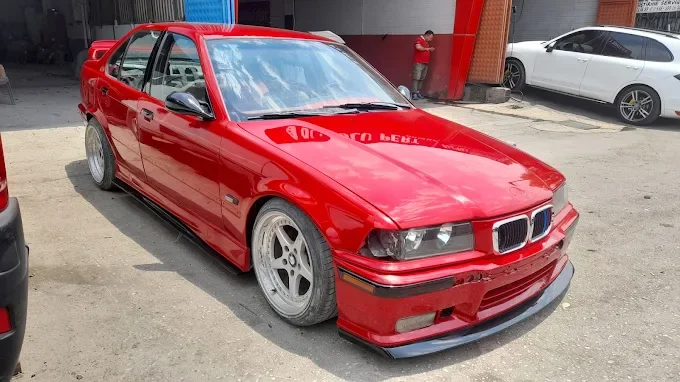
Why does the color not match even with the paint code? The nuances of color matching
One of the most frequent complaints in the automotive painting industry is: "It was painted with the original paint code, but the shade came out different." Even when the code is correct, significant physical and chemical reasons can prevent the color from matching exactly.
Caution: From the moment a car leaves the factory, it is exposed to Antalya's intense sunlight, UV rays, acid rain, and brush car washes. Over time, the clear coat wears at a microscopic level and pigments fade. When you apply the factory-new paint code directly to a 5-year-old car, the newly painted panel will look brighter and more vivid, while the older panels remain duller.
In addition, manufacturers occasionally produce "sub-variants" (lighter, darker, yellowish, or bluish shades) under the same paint code. A professional paint technician does not spray paint directly onto the car. They first prepare a test spray-out card, bake it in the booth, and adjust the shade against the vehicle's existing panel in daylight.
Shade differences in metallic, pearlescent, and solid paints
Color matching difficulty varies depending on the type of paint:
- Solid Colors: Do not contain metallic or pearlescent particles. Applied as two coats or single stage. Matching the shade is easier compared to other paints.
- Metallic Colors: Contain microscopic aluminum flakes. Spray gun pressure, nozzle diameter, and spraying distance affect the alignment of these aluminum flakes. For this reason, high precision craftsmanship is essential.
- Pearlescent Colors: Composed of three stages: base color, pearlescent mica mid-coat, and clear coat. Because the color shifts depending on the angle of light refraction, a shade mismatch is inevitable unless blended into neighboring panels.
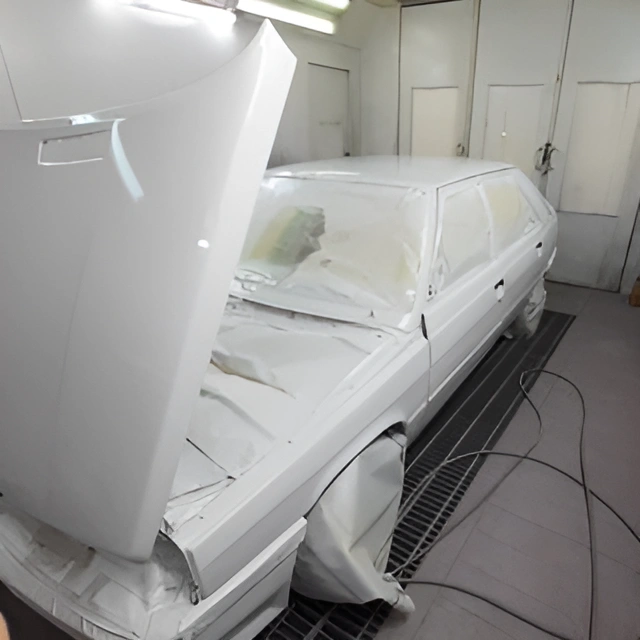
To learn more about our advanced oven-baked painting processes and how colors are cured with hot air circulation, you can review our what is oven-baked paint guide.
Panel painting prices 2026
Determining the correct paint code and applying paint in an oven-baked booth are professional processes. At our workshop in Kepez Akdeniz Sanayi Sitesi, our owner-approved panel painting and complete respray price ranges for 2026 are as follows:
| Panel to be Painted | Price Range | Average Repair Duration |
|---|---|---|
| Bumper painting | 2,500–5,000 TL | 1–2 days |
| Door painting | 3,500–6,000 TL | 1–2 days |
| Fender painting | 4,000–7,000 TL | 1–2 days |
| Hood or Roof painting | 5,000–10,000 TL | 1–2 days |
| Complete vehicle respray | 25,000–80,000 TL | 5–10 days |
You can find full details on all panels and damage severity on our Antalya panel painting prices page.
When should you visit a professional workshop?
If you cannot find your car's paint code, if attempts with off-the-shelf spray cans resulted in shade differences, or if panels need repainting due to sun fading, you should leave the job to specialists.
In our workshop, we work with world-leading PPG and Standox paint systems. We cure paints in a dust-free oven-baked paint booth and duplicate your vehicle's current shade using our digital color matching system. We guarantee all our workmanship. You can visit Kepez Akdeniz Sanayi Sitesi for a free color inspection and assessment, or send photos via WhatsApp for preliminary information.
Can't find your vehicle's paint code or dealing with a shade mismatch? Send a photo, and we will assist you quickly.
Digital color matching and flawless oven-baked paint service in Antalya Kepez Akdeniz Sanayi Sitesi.
Frequently Asked Questions
Where is the car paint code located?
The car paint code is located on the vehicle manufacturer information label. The most common locations are the driver-side B-pillar (door jamb), front panel under the engine hood, next to the spare tire in the trunk well, or inside the glove box.
Is the car paint code listed on the vehicle registration document?
No, the paint code is not listed on the vehicle registration document. The registration only states generic color descriptions like 'White', 'Black', or 'Grey'. The specific code required for paint mixing is found on the metallic plate or paper sticker on the vehicle.
How do you find the paint code if the label is missing?
If the label is missing or removed, the original factory color code can be retrieved through authorized service dealer systems using the vehicle's 17-digit vehicle identification number (VIN). At our workshop, we perform direct formula analysis on the vehicle using our digital color matching system.
Is knowing the paint code enough for an exact color match?
No, it is not enough on its own. From the day a car leaves the factory, exposure to sunlight, weather conditions, and washing causes the paint tone to shift. For an exact match, sub-variants of the code must be tested and digital color matching must be performed.
Why is color matching more difficult with metallic and pearlescent paints?
In metallic paint, the size and spray angle of aluminum flakes alter the tone, while in pearlescent paint, the thickness of the mica mid-coat changes the color. For this reason, preparing a test spray-out card is essential for pearlescent and metallic colors.
Is a paint code required for a touch-up pen?
Yes, randomly purchased generic touch-up paints will stand out like stains on the car. Even for spot touch-ups, fresh paint mixed according to the vehicle's original code should be used; for localized repairs, check our Antalya spot repair painting page.
How much does it cost to identify the vehicle color and paint a panel?
In our workshop, our 2026 panel painting prices using PPG and Standox paints range from 2,500–5,000 TL for a bumper, 3,500–6,000 TL for a door, and 4,000–7,000 TL for a fender, and usually take 1–2 days. For complete repairs, you can check our Antalya complete vehicle painting page.
Related pages
- What is pearlescent paint guide
- What is oven-baked paint guide
- Car painting terms glossary
- Antalya panel painting prices
- Antalya spot repair painting
Let Us Identify Your Color Code and Apply Flawless Paint
For panel painting and spot repair needs that perfectly match your vehicle's factory color, visit our workshop in Kepez Akdeniz Sanayi Sitesi or contact us via WhatsApp.