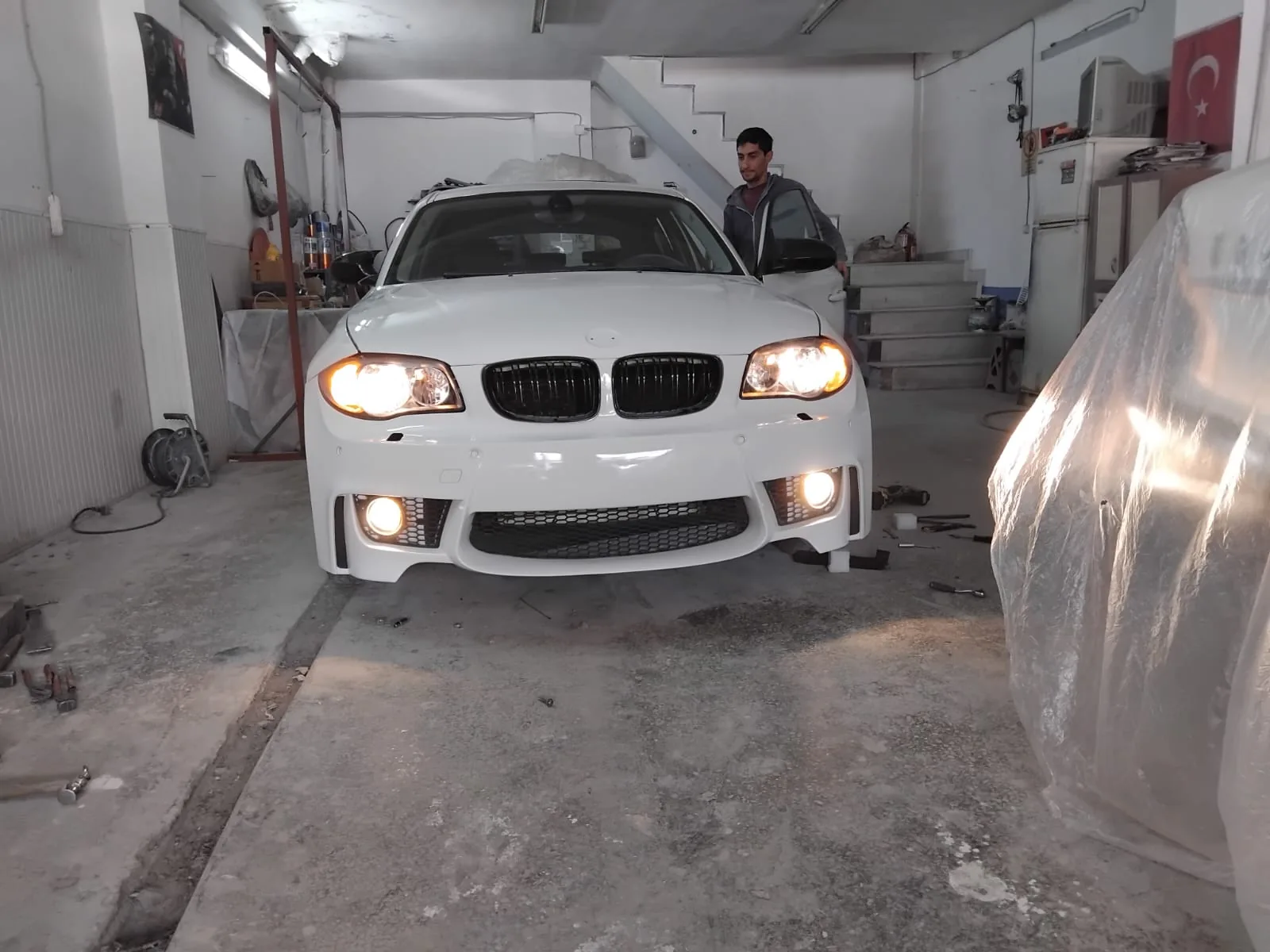
Car painting takes between two and ten days depending on scope: single panel 1–2 days, complete car painting 5–10 days. In our workshop (Kepez Akdeniz Sanayi Sitesi industrial estate), door painting is 3,500–6,000 TL, hood or roof is 5,000–10,000 TL, and complete car painting is in the 25,000–80,000 TL range. Send a photo of the damage via WhatsApp for an exact price.
Anyone considering having their car painted usually starts with the same questions: How much will it cost? How many days will I be without a car? Will the vehicle lose value? This guide answers all of these questions in one place from a workshop perspective. Because the condition of your vehicle determines the actual cost, we provide price ranges and explain why the ranges are so broad.
What is car painting, and what does it include?
Car painting is the reapplication of paint to part or all of a vehicle's exterior surface. Terms like "car painting," "respraying," and "auto painting" describe the same basic process; the difference lies in scope.
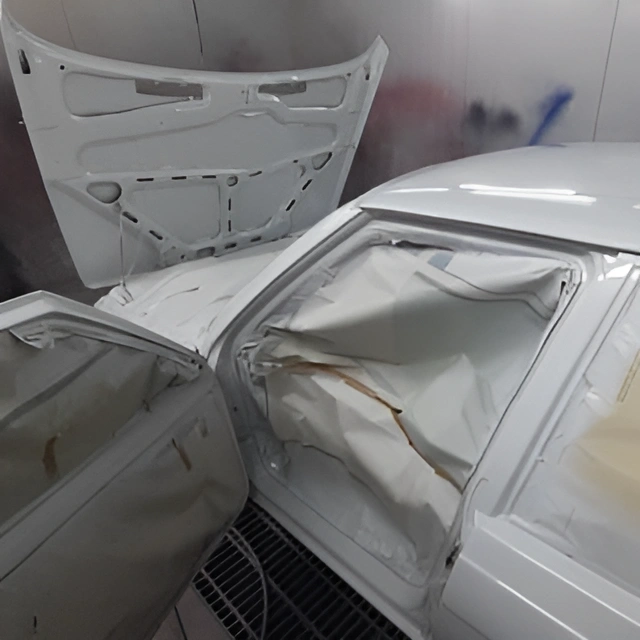
The quality of the job depends not on the paint color, but on the preparation done underneath. Sanding, body filler, primer, and masking labor make up the bulk of the total effort. Paint is applied in the booth in a few hours, but preparing the surface for painting can take days.
What is the difference between spot repair painting, panel painting, and complete painting?
The difference is the size of the painted area: spot repair painting covers only the damaged area on a panel, panel painting covers the entire panel, and complete painting covers the vehicle's entire exterior surface. Which one is required depends on the location of the damage and the overall surface condition.
| Type | When to choose? | Duration | Key consideration |
|---|---|---|---|
| Spot repair painting | Limited damage such as minor scratches, stone chips, or bumper edges | 1–3 days (minor damage) | Color matching and blending quality into adjacent panels |
| Panel painting | Damage to one or several panels such as a door, fender, hood, or bumper | 1–2 days (single panel) | Color and gloss harmony with adjacent panels |
| Complete car painting | Widespread fading, clear coat peeling, extensive damage, or overall refresh | 5–10 days | Balance between budget and vehicle value |
Most car owners should evaluate whether the issue truly covers the entire exterior before opting for a complete respray. If only two panels have problems, a complete paint job is an unnecessary expense. On the other hand, if half the vehicle is faded, painting panels individually can end up costing more than a complete respray. With a free inspection at our workshop, we examine the whole car and compare both options side by side.
How much does car painting cost? (2026 ranges)
Car painting prices range from 3,500–6,000 TL for a door to 25,000–80,000 TL for a complete respray. The factors that influence the price for the same job are explained in the next section.
| Service | Price range | Duration |
|---|---|---|
| Door painting | 3,500–6,000 TL | 1–2 days |
| Fender painting | 4,000–7,000 TL | 1–2 days |
| Hood or roof painting | 5,000–10,000 TL | 1–2 days |
| Bumper painting | 2,500–5,000 TL | 1–2 days |
| Complete car painting | 25,000–80,000 TL | 5–10 days |
This table summarizes what people searching for "car painting prices" or "car painting cost" look for most. For a more detailed panel-by-panel breakdown, see our panel painting prices page, and for an overall look at the Antalya market, see our Antalya auto paint prices 2026 article.
What factors determine the price?
- Condition of damage: There is a significant difference in labor between a simply faded panel and a dented one requiring body filler and reshaping.
- Color: Metallic, pearlescent, and tri-coat colors cost more in both paint materials and application compared to solid colors.
- Paint brand: We use PPG and Standox paint. The brand and system affect pricing; you have every right to ask which paint brand will be used in your quote.
- Scope of preparation: Light surface sanding cannot cost the same as stripping old paint down to bare metal or primer.
- Vehicle size: The roof of an SUV and the roof of a small city car do not consume the same amount of materials.
Tip: When getting quotes from three different places, do not look only at the bottom line. Each quote should clearly state which panels will be painted, the paint brand, whether a dust-free booth is used, and the workmanship warranty. Comparing quotes without matching these items is misleading.
How long does car painting take?
Single panel painting takes 1–2 days, and complete car painting takes 5–10 days. When the duration extends, the reason is usually not the painting itself, but the bodywork and repair needed before painting.
| Job type | Duration |
|---|---|
| Panel painting | 1–2 days |
| Minor damage repair + paint | 1–3 days |
| Moderate damage repair + paint | 5–7 days |
| Complete painting | 5–10 days |
| Major damage repair | 2–4 weeks |
Paint drying and curing time is included in these estimates. Paint and clear coat applied in an oven-baked booth (paint booth with baking) are not ready the moment the car exits the booth; pre-delivery inspection, polishing, and reassembly are required. Be cautious with any workshop promising rushed delivery: a realistic schedule should be clearly explained to you.
Does repainting a car reduce its value?
Quick answer: it will appear as a repainted panel on an inspection report and may slightly affect the resale price, but leaving damaged paint as-is usually causes even more depreciation. We share this as general market knowledge; the impact is not identical on every vehicle.
When purchasing a used vehicle, vehicle inspection companies measure paint thickness and mark panels in the report as "original," "painted," "partially painted (spot repaired)," or "replaced." Buyers often use a repainted panel as bargaining leverage. Three factors determine how significant this impact is:
- Location of the paint: Work on structural areas such as the roof, pillars, and chassis makes buyers more cautious. Painting bumpers, doors, or fenders generally raises fewer concerns.
- Paint quality: When color match, gloss, and a texture-free finish are done properly, it is unnoticeable from the outside; it will only appear on the report via paint thickness gauges.
- Reason for painting: Cosmetic reasons like sun fading, clear coat peeling, and minor scratches are judged very differently from accident-related structural repairs.
If you plan to sell the vehicle soon, it is useful to assess the resale impact first. If you plan to drive it long term, keep in mind that faded or peeling paint is a problem that worsens over time. Keeping invoices and photos of the work done will make it easy to answer why it was painted when you sell.
Caution: Do not use an outdated inspection report or falsified thickness readings to claim a vehicle is "unpainted." The buyer's inspection will reveal the truth, and a loss of trust is far costlier than any paint-related depreciation.
How to prepare before getting your car painted?
A brief preparation before heading to the workshop ensures an accurate quote and a clear delivery date. Half an hour is all it takes.
- Take photos: Take close-up photos of the damaged or faded area, as well as a wider shot of the entire panel in daylight. Scratch depth and color differences should be clearly visible in the photo.
- Note previous repairs: Recall whether the vehicle has been repainted before, its accident history, and any prior repair invoices. Prior paint thickness alters the plan for new work.
- Empty the vehicle's interior: Remove personal belongings from the trunk and door pockets; they can get damaged during disassembly.
- Have alternative transport: Plan your transportation for the time you will be without a vehicle. Even panel painting takes one or two days.
- Think of your budget as a range: Additional work discovered during inspection (such as rust or deep dents) may adjust the budget. Factoring in this flexibility from the start avoids surprises.
Solid, metallic, and pearlescent paint: what is the difference?
Paint type directly dictates application difficulty and color matching precision. That is why the price for painting the same panel can vary by color.
- Solid colors: Single-stage colors like basic white, black, or red. They are relatively easy to match, and repairs show minimal difference.
- Metallic colors: Contain aluminum flakes; the orientation of the flakes reflects light differently. Even slight variations in application technique create color shifts, demanding significant experience.
- Pearlescent and tri-coat colors: A pearl mid-coat and clear coat are applied over the base color. This is the hardest category to match, making digital color matching and blending into adjacent panels essential. For details, see our guide on what pearlescent paint is and how it is repaired.
Your vehicle's paint code is usually located on a label in the door jamb or engine bay. Noting this code before visiting the workshop speeds up the process, but it is not enough on its own: paint faded by the sun over years will look different from factory fresh code, requiring the workshop to tint and adjust to the aged shade.
Repaint, repair, or restore?
Not every cosmetic issue requires a full repaint; in some cases, more economical solutions are sufficient. Choosing the right method preserves your budget significantly.
| Condition | Typically recommended solution |
|---|---|
| Surface swirl marks, light scratches, dullness | Machine polishing |
| Deep scratch down to metal, small stone chip | Spot repair painting or touch-up |
| Dent, creased panel, cracked bumper | Bodywork repair + panel painting |
| Clear coat peeling, panel-wide fading | Paint repair or panel painting |
| Fading and damage across multiple panels | Complete car painting |
What is involved in changing a car's color?
Changing a vehicle's color is more comprehensive than a standard respray; unless door jambs, under-hood areas, the trunk compartment, and inner pillars are also painted, the old color remains visible whenever a door is opened. Because of this, both duration and cost approach the upper tier of complete car painting.
Plan the following before proceeding:
- The new color must be registered on the vehicle title. The traffic registration department handles this process; confirm official requirements with them before applying.
- Keep documentation of the color change for insurance and resale purposes.
- View the selected swatch from the color catalogue on a large sample in natural daylight. A color that looks great on a small swatch card may look darker or lighter across the entire car.
If you want to refresh the existing color rather than change it, the car's current tone is measured with digital color matching; the goal here is to make newly painted panels indistinguishable from neighboring ones.
How to choose the right workshop? (Checklist)
Three things distinguish a reputable workshop: they can showcase their work, provide written quotes, and give clear answers to your questions. You can use the checklist below over the phone or during an in-person visit.
- Ask about the booth typeIs the paint applied in a dust-free, enclosed oven-baked booth? Painting in an open area risks dust contamination and rough surface texture.
- Find out the paint brandCheck the quote for which brand and system will be used. We use PPG and Standox.
- Ask about the color matching methodIs color matching done by eye or with digital measuring devices? Metallic colors show discrepancies very easily.
- Request a written warrantyThe scope and duration of the workmanship warranty should be included in the written quote.
- Ask for genuine work photosAsk to see the workshop's own portfolio rather than stock photos. Before-and-after photos demonstrate true craftsmanship.
- Ask if the inspection is freeIn our workshop, inspections are free of charge. Where evaluations are not offered freely, it is wise to ask how pricing is determined.
- Clarify the timeframeGet a delivery date in writing or by message. Do not settle for vague "in a few days" answers.
What to inspect when picking up your vehicle?
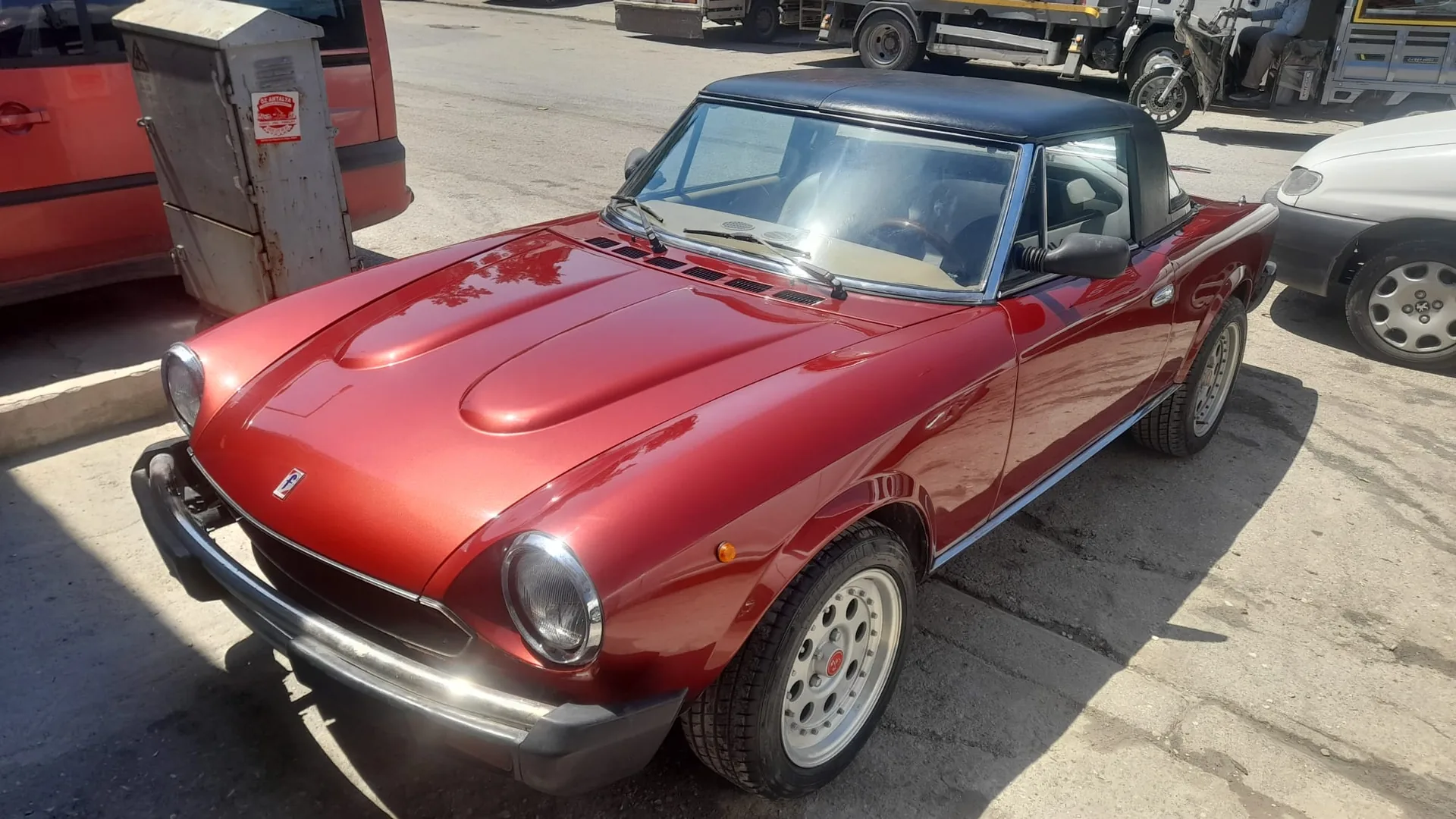
Always inspect and pick up your vehicle in broad daylight and an open area; fluorescent workshop lighting hides flaws. Take your time and check panel by panel.
- Color match: Look at the painted panel and the adjacent panel from the same angle. If differences appear only from certain angles, the metallic flake alignment may be mismatched.
- Surface finish: There should be no orange peel effect, dust specks, runs, or rough texture. Run your fingertips gently across the finish; it should feel smooth.
- Panel gaps: Door, hood, and trunk gaps should be symmetrical.
- Masking residue: Look for paint overspray or tape residue around window rubbers, plastic trims, indicator lights, and door handles.
- Reassembly: Are disassembled parts properly refitted, screws complete, and door closing sounds consistent with how they felt before?
- Written documentation: You should have the warranty coverage and the list of painted panels in hand.
For a more detailed checklist, see our article on the car paint pick-up checklist.
Common mistakes when having a car painted
The most expensive mistake is looking only at the initial price without clarifying the scope of work. The scenarios below are the most common issues we encounter in the workshop, and all of them are preventable.
- Deciding solely on price: An unusually low quote usually means shortcuts were taken on preparation, materials, or booth usage.
- Relying on verbal quotes: Which panels were supposed to be painted often becomes a dispute later. Always get quotes in writing or via message.
- Painting without addressing root causes: Painting over rust or moisture-trapping areas brings the defect back to the surface within a few months.
- Not blending single panels with neighbors: On an older, sun-faded vehicle, a newly painted panel looks distinctively fresh. Discuss color tinting and blending with adjacent panels with your workshop.
- Washing fresh paint too soon: Pressure washing or brush car washes before the paint has fully cured damage the finish.
- Ignoring existing clear coat peeling: Polishing over peeling clear coat is never a lasting solution. For details, see our article on clear coat peeling and paint flaking.
Car painting in Antalya
For those looking to have their car painted in Antalya, our workshop is located in Kepez Akdeniz Sanayi Sitesi industrial estate at Şafak Mah. 5040. Sk. Sanayi 28/A Blok No 16. We are open Monday to Saturday from 08:30 to 19:00.
Because Antalya's long summers, intense UV rays, and high humidity accelerate paint aging, fading and clear coat peeling are very common here. For this reason, car painting in the region is often done not just for aesthetics, but to protect and restore the existing surface. What you can do to protect paint in summer is explained in our article on summer paint protection and UV.
Our process works as follows: you send photos via WhatsApp, we provide an estimated price and timeframe, and then finalize the quote with a free on-site inspection at our workshop. We apply paint using PPG and Standox products in a dust-free oven-baked booth (paint booth with baking), and back our workmanship with a warranty. Service pages for the procedures mentioned in this guide: Antalya car painting, complete car painting, and spot repair painting.
Send a photo of the damage or faded area to receive an estimated price and timeframe. Workshop inspection is free.
When should you visit a workshop?
If your paint matches any of the conditions below, do not wait to get it evaluated at a workshop. The longer you wait, the more extensive the repair becomes and costs increase.
- If scratches have reached bare metal or primer (showing grey, white, or metallic underlayers).
- If bubbling, flaking paint, or rust spots have begun to form.
- If the clear coat surface has turned dull or chalky white and does not recover with machine polishing.
- If there are dents, creases, or misaligned panel gaps following an accident.
- If an obvious color mismatch on a single panel will raise concerns for prospective buyers before selling.
Frequently asked questions about car painting
How long does car painting take?
Single panel painting usually takes 1–2 days. Complete car painting takes 5–10 days. If damage repair is also needed, the duration extends depending on the extent of the damage: minor damage takes 1–3 days, moderate damage takes 5–7 days, and severe damage takes 2–4 weeks.
What factors affect car painting prices?
The size of the panel, vehicle color (metallic and pearlescent colors are more expensive), amount of surface damage, paint brand used, and surface preparation labor determine the price. A photo or an on-site inspection is required for an exact quote.
Does repainting a car decrease its resale value?
A repainted panel will appear in the inspection report and can slightly affect the resale price. However, damaged, faded, or peeling paint also causes value loss. A properly executed and documented paint job often creates fewer issues than damaged paint.
What is the difference between complete car painting and panel painting?
In panel painting, only damaged or faded panels are painted and the color is blended with adjacent parts. In complete painting, the entire exterior is renewed; therefore, both the duration (5–10 days) and budget (25,000–80,000 TL range) are higher.
Is it possible to change a car's color?
Yes, but since door jambs, the engine bay, and trunk edges are also painted, the process is more extensive than a standard complete respray. In addition, the vehicle registration must be updated through the traffic registry office.
What should I check before getting my car painted?
Ask whether the workshop's paint booth is dust-free, which paint brand they use, whether they offer a workmanship warranty, and if they provide a written quote. Ask to see real photos of their previous work.
Do I need an appointment for car painting at Nett Oto Boya?
You can simply drop by for an inspection; the workshop is open Monday–Saturday from 08:30 to 19:00. Sending a photo via WhatsApp beforehand speeds up planning.
When can the car be washed after painting?
As a general rule, abrasive washing and polishing should be avoided until the fresh paint has fully cured. Your workshop should inform you of the exact waiting time upon delivery based on your vehicle's paint and clear coat.
Related pages
- Antalya car painting: overview of service and workflow
- Antalya complete car painting: full vehicle restoration
- Antalya spot repair painting: localized painting for minor damage
- Antalya panel painting prices: panel-by-panel price ranges
- Antalya car paint prices 2026: general price overview